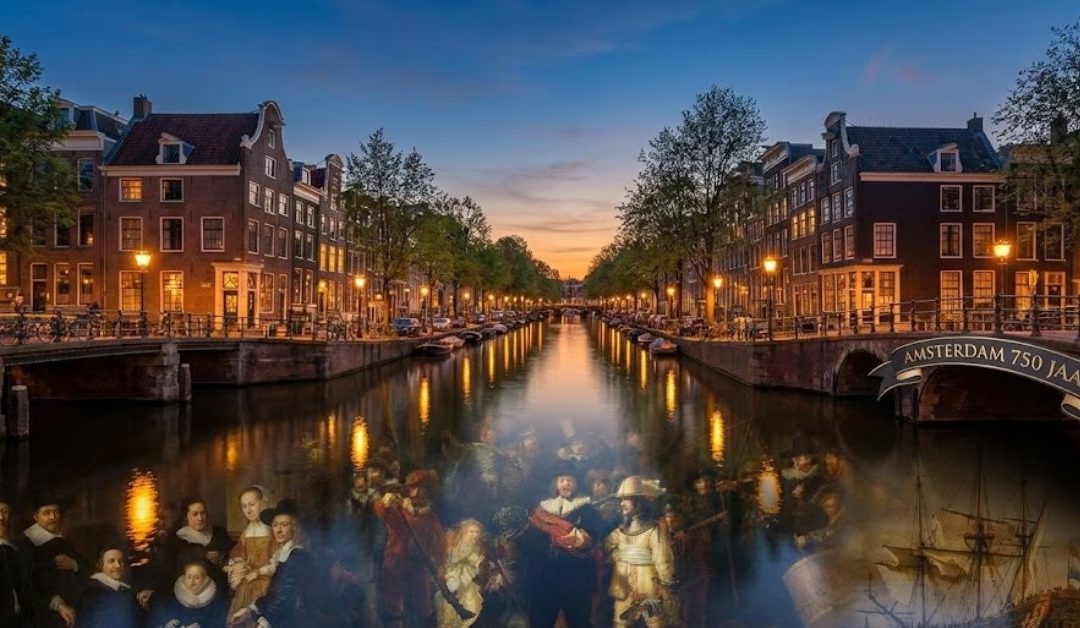
Amsterdam is a city built on water, but held together by stories. In 2025, as the “Venice of the North” celebrates its monumental 750th anniversary, the city is doing more than just lighting fireworks and hosting parades. It is reflecting. For seven and a half centuries, these concentric canal rings have acted as a silent diary, recording the rise of empires, the whispers of revolutionaries, and the footsteps of millions of dreamers.
If you are looking for the heart of the Dutch capital, you won’t find it in a guidebook of dry facts. You find it through storytelling. Amsterdam is a living, breathing narrative, and as we celebrate #Amsterdam750, it is time to look past the postcard-perfect gables and listen to the tales the water wants to tell.
Here are 7 untold stories of Amsterdam that define its past and shape its future.
1. The Invisible Merchants: The Women of the Jordaan
When we think of the “Golden Age,” we often picture men in white ruffs negotiating spice trades. But the secret to Amsterdam’s survival often lay in the hands of the women who stayed behind. In the 17th and 18th centuries, while husbands were at sea for years at a time, the women of the Jordaan district became the city’s backbone.
They weren’t just “keeping the house”; they were running businesses, managing complex finances, and navigating the legal system—rights that women in other parts of Europe wouldn’t see for centuries. These women founded many of the hofjes (almshouses) you see today. Every time you walk through a hidden courtyard door in the Jordaan, you are stepping into a sanctuary built by female resilience. Their stories are etched into the stone lintels above the doors, waiting for someone to look up and read them.
2. The Church in the Attic: A Tale of “Gedoogbeleid”
Amsterdam is world-famous for its gedoogbeleid (policy of tolerance). While many think this started in the 1970s, the “storytelling Amsterdam” tradition proves it goes back much further.
In the heart of the Red Light District lies Ons’ Lieve Heer op Solder (Our Lord in the Attic). During the Reformation, when Catholicism was officially banned, a wealthy merchant built an entire, stunning cathedral inside the top three floors of his canal house. The authorities knew it was there. They could hear the hymns. But in true Amsterdam fashion, they chose to “not see” it, provided the peace was kept. This story isn’t just about religion; it’s about the pragmatic Dutch soul that realized very early on that a city thrives when people are allowed to be who they are behind closed doors.
3. The Black Heritage of the Amstel
For too long, the narrative of Amsterdam’s 750 years was told through a single lens. But as the city matures, it is finally embracing the complex, often painful stories of its colonial past. The very wealth that built the grand canal houses of the Herengracht was inextricably linked to the labor of enslaved people in Surinam, Curacao, and Indonesia.
If you look closely at the facades of certain buildings, you will see “Moor” heads or crests representing trade routes. These aren’t just architectural ornaments; they are witnesses. Today, organizations like The Black Archives are reclaiming these narratives, ensuring that the 750th anniversary honors the Surinamese and Antillean communities that have shaped the city’s modern identity. The “storytelling Amsterdam” movement of 2025 is one of inclusion, where the silence of the past is being replaced by vibrant, diverse voices.
4. The Huis met de Bloedvlekken (The House with the Bloodstains)
Every great city needs a ghost story, and Amsterdam’s most chilling tale resides at Amstel 216. Known as the “House with the Bloodstains,” it was once the home of the eccentric and troubled diplomat Gijsbert van Baak in the 17th century.
Legend says that in a fit of madness, or perhaps following a dark ritual, Van Baak scrawled cryptic symbols and names across the outside of his house in his own blood. If you walk past the building today and the light hits the stones just right after a rainstorm, some locals swear you can still see the dark, reddish marks of his despair. It serves as a reminder that beneath the city’s merchant pragmatism lies a deep vein of mystery and the occult.
5. The Poezenboot: Compassion on the Water
Not all great stories involve kings or merchants; some involve whiskers. In 1966, a woman named Henrietta van Weelde found a family of cats under a tree and decided to take them in. Then came another, and another. Space ran out, so she did what any resourceful Amsterdammer would do: she bought a houseboat.
The Poezenboot (The Cat Boat) became the world’s only floating animal sanctuary. It has survived city regulations, the freezing of the canals, and the passage of time. It’s a quintessential Amsterdam story—a quirky, slightly stubborn individual deciding to do something kind in a way that only works in this city. It represents the “hidden” Amsterdam that locals cherish: the city of small, meaningful gestures.
6. The Pink Triangles: A Haven of Resilience
Amsterdam’s identity as the “Rainbow Capital” is a story of hard-won battles. Located next to the Westerkerk is the Homomonument, three pink granite triangles that form a larger triangle.
The story here is one of layering history. One triangle points toward the Anne Frank House (representing the persecuted), one toward the Dam Square (the center of society), and one toward the headquarters of COC Nederland (the world’s oldest active LGBT organization). This isn’t just a monument; it’s a narrative of the transition from victimhood to pride. For the 750th anniversary, this site stands as a testament to Amsterdam’s role as a global sanctuary for those who were told they didn’t belong elsewhere.
7. The New Era: The Oral Tradition at Mezrab
The final story isn’t about the past—it’s about how we tell stories today. If you head to the Eastern Docklands, you’ll find Mezrab, a cultural center that has single-handedly revived the art of oral storytelling in Amsterdam.
On any given night, you’ll find a Persian storyteller sharing ancient myths, followed by a Dutch teenager talking about their first heartbreak, followed by a Syrian refugee sharing the journey of their life. This is where the “storytelling Amsterdam” keyword truly comes to life. It proves that even after 750 years, the most powerful thing we can do is sit in a circle, put down our phones, and say, “Let me tell you a story.”
How to Experience “Storytelling Amsterdam” in 2025
The 750th anniversary is the perfect time to visit, but to truly understand these stories, you have to go beyond the tourist traps.
- Walk the Canals at Twilight: This is when the “whispers” are loudest. The reflections of the lamps on the water create a cinematic backdrop that makes it easy to imagine the city as it was in 1275.
- Visit Local Hubs: Don’t just go to the Rijksmuseum. Check out the Amsterdam Storytelling Festival and the events hosted at amsterdamstorytelling.com.
- Look Up and Down: The stories are in the “gable stones” (gevelstenen) above the doors and the brass “stumbling stones” (stolpersteine) in the pavement.
Why Storytelling Matters for Amsterdam’s Future
As Amsterdam faces the challenges of the 21st century—sustainability, housing, and global tourism—it is its stories that will guide it. Stories remind us of the city’s core values: innovation, tolerance, and community. By sharing these “untold” tales, we ensure that the next 750 years are just as vibrant as the last.
Amsterdam is more than a destination; it’s a conversation. Whether you are a local who has lived here for decades or a traveler visiting for the first time, you are now part of that story.