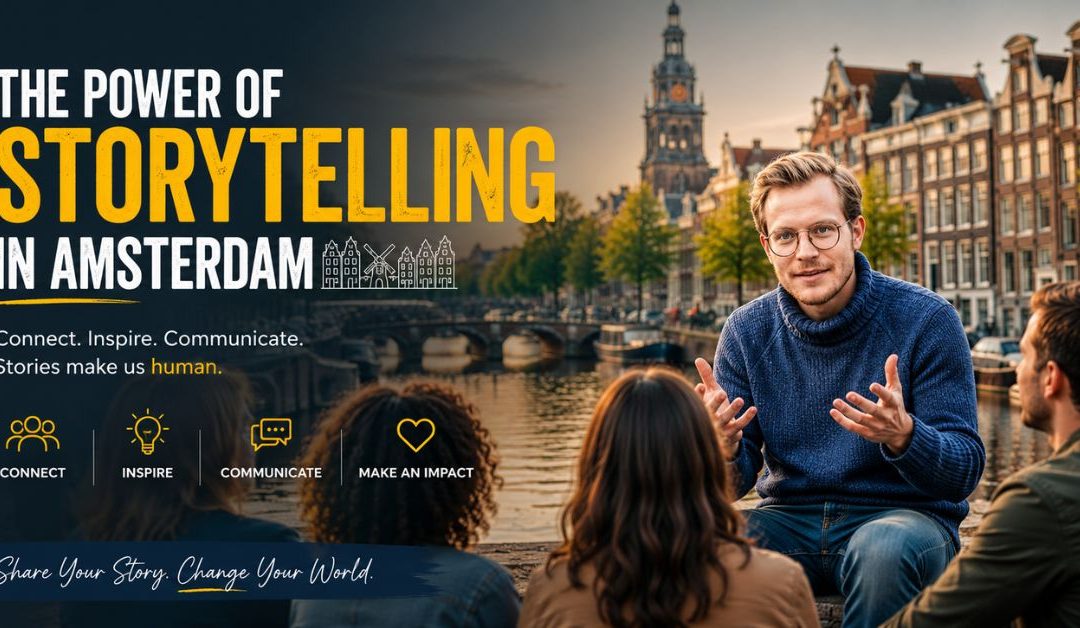
In this guide, we explain why storytelling matters in Amsterdam’s professional and cultural scene, how the brain responds to stories, and what opportunities exist here to develop your narrative skills. We cover storytelling for business, leadership, personal branding, team building, and public speaking. We also highlight local events and resources – from the Amsterdam Storytelling Festival at Podium Mozaïek to community centers like Mezrab – that keep the city’s storytelling tradition alive. Finally, you’ll find practical tips, a comparison table of workshop formats (corporate, public, online), and FAQs about storytelling.
By the end, you’ll see why mastering storytelling in Amsterdam isn’t just a creative hobby – it’s a strategic skill that can boost your career, leadership, and personal connections.
What Is Storytelling?
At its heart, storytelling is the practice of communicating ideas through a structured narrative. Unlike a plain list of facts, a story has a beginning, conflict or challenge, and resolution. It often includes characters, emotions, and context that draw listeners in. Good stories help audiences see meaning: they explain not just what happened but why it matters.
Storytelling isn’t just for novels or movies. We use stories whenever we:
- Share an experience or lesson with colleagues
- Give a presentation or pitch an idea
- Teach a concept or train new skills
- Build a brand’s image with narratives
In short, storytelling is a universal communication tool. Science shows that stories engage more of the brain than dry data alone. When people hear a story, their brains release oxytocin (the “trust hormone”) and synchronize neural activity with the storyteller. This neural coupling and emotional arousal help listeners pay attention, feel empathy, and remember information much longer than isolated facts.
Why Storytelling Matters in Amsterdam
Amsterdam is a global hub where tradition meets innovation. It attracts talent from around the world and hosts major international headquarters, startups, and cultural institutions. In this creative, cosmopolitan environment, storytelling has unique benefits:
- Bridges Cultural Gaps: Amsterdam’s workforce speaks many languages and comes from diverse backgrounds. Storytelling creates a common narrative that everyone can relate to, regardless of culture or language. A local communication coach notes that “weaving narrative into your strategy taps into human empathy and can turn ordinary messages into memorable experiences”. By framing information in a story, you make it understandable and engaging for a broad audience.
- Builds Brand Connection: People in Amsterdam (and around the world) don’t just buy products; they buy into stories and values. A brand with a compelling story – for example, linking a modern tech startup to Amsterdam’s storied trade history – stands out. Authentic storytelling adds credibility and trust, which are crucial in Amsterdam’s conscientious market. As one expert explains, sharing genuine narratives about mission or team members “moves the interaction beyond a simple transaction” and fosters loyalty.
- Enhances Creativity and Innovation: Amsterdam’s reputation as a design and tech capital means professionals constantly seek creative ways to differentiate themselves. Storytelling is inherently creative – it invites imagination and personal voice. Whether you’re an entrepreneur pitching investors or a manager setting vision, narratives help you connect ideas in fresh, human ways.
- Strengthens Engagement: In our information-overloaded era, audiences quickly tune out bullet-point slides or raw data. A well-told story, however, captures attention. Research shows that when messages are embedded in narratives, listeners are much more likely to remember and empathize. In Amsterdam’s fast-paced business community, having a memorable story can give you a real edge.
The Science Behind Storytelling
Why do stories stick in our minds? Here’s a quick look at what happens in the brain:
- Neural Engagement: Listening to a story activates multiple regions of the brain – including those involved in language, sensory experiences, and emotions – far more than hearing disconnected facts. This broad engagement creates deeper learning. In fact, neuroscientists have shown that as someone tells a story, listeners’ brain waves literally sync up with the speaker’s (a phenomenon called neural coupling). This synchronization underlies the feeling of connection you get from a good storyteller.
- Emotional Memory: Stories often include emotion (happiness, surprise, suspense), which triggers stronger memory encoding. People tend to remember narrative images and feelings much longer than raw data. For example, when an everyday detail is wrapped in an emotional context, we recall it with more vivid clarity. Storytelling literally makes information “stick”.
- Trust and Empathy: Storytelling releases oxytocin, a neurochemical associated with empathy and trust. When a speaker shares a heartfelt story – say, about overcoming a challenge at work – the audience literally feels more bonded to that person and message. This is why narratives are so effective in team-building and leadership settings: they break down barriers and create psychological safety.
- Cognitive Ease: The human brain likes patterns. Stories provide a familiar structure (beginning, middle, end, conflict, resolution), which makes new information easier to process. This reduces cognitive load and helps audiences understand complex concepts naturally.
In sum, the science is clear: storytelling leverages how our brains evolved to communicate. By appealing to emotion and structure, it transforms mere information into knowledge we retain and act on.
Storytelling for Business and Leadership
From Facts to Trust: Why Storytelling Works
Modern businesses in Amsterdam (from small startups to international corporations) recognize that storytelling is key to effective communication. Studies show that stories can be remembered up to 22 times more than facts alone, and people are far more likely to empathize when a message is woven into a narrative. Here’s why companies use storytelling:
- Engagement: Executives and managers who tell stories (about the company’s history, core values, or customer success) find that employees are more engaged. Instead of dry presentations, stories illustrate how real people achieve goals, making strategic objectives relatable.
- Alignment: In leadership, stories convey vision and direction. A founder’s personal journey or a customer’s transformation story can crystallize the company mission in a way that spreadsheets cannot. In Amsterdam’s multicultural teams, having a common story helps people connect across language and role differences.
- Brand Differentiation: As one report notes, consumers in Europe “buy into beliefs, missions, and stories,” not just products. A distinctive brand narrative gives businesses an edge. For example, a green-tech company in Amsterdam might tell a story about its sustainable roots and community impact, appealing to values-driven customers.
- Training and Culture: Storytelling isn’t just external. Organizations use it internally to train new hires, build company culture, and share best practices. A creative narrative makes training memorable – employees recall anecdotes about success or failure far better than bullet-point manuals.
Storytelling in Leadership
Great leaders are, at heart, great storytellers. In Amsterdam’s dynamic business environment, leaders use stories to inspire teams and guide change. For instance:
- Vision and Change Management: When a company undergoes transformation (new technology, strategy shift, etc.), facts alone can create anxiety. A leader who frames change within a narrative — “Imagine where we started, what challenges we face, and where this path leads” — helps people feel part of a meaningful journey. This narrative context can increase buy-in and reduce resistance.
- Building Trust: Sharing authentic stories about the company’s values or challenges creates transparency. Hearing an honest story about how a team overcame obstacles builds trust. As one coach puts it, storytelling makes communication “clearly and humanely delivered”, strengthening relationships.
- Empowerment and Motivation: Leaders who tell stories about success (or learnings from failure) motivate their staff. For example, relating a small success story of a team member who used initiative can inspire others. These stories make abstract goals tangible.
Storytelling for Teams and Collaboration
Narratives aren’t just for one person – they can bring teams together. Interactive storytelling exercises are an increasingly popular team-building tool in Amsterdam. Teams might co-create a group story or take turns sharing moments they were proud of. This process:
- Builds Empathy: When colleagues share personal experiences in story form, others learn about their perspectives and values. This deepens understanding within the team, essential for Amsterdam’s international teams.
- Enhances Communication: Teams practicing storytelling report better listening and clearer communication. By explaining ideas as stories, members learn to avoid jargon and focus on what really matters to the group.
- Clarifies Purpose: Joint storytelling (like crafting a “Team Hero’s Journey”) helps a group articulate its mission and vision together. It turns abstract team goals into a narrative everyone has contributed to, increasing ownership.
For example, Amsterdam Storytelling’s team-building workshops guide participants through exercises like creating a “hero story” of their brand or sketching personal journey maps. This creates shared moments that connect co-workers beyond daily tasks.
Storytelling for Sales and Marketing
In sales meetings or marketing pitches, narrative is equally critical. Buyers and clients are inundated with data. A sales pitch structured as a story (presenting a customer’s pain, the turning-point solution, and happy outcome) is far more compelling. Marketing campaigns also thrive on storytelling – whether it’s a video highlighting user stories or blog posts that weave customer experiences into the company’s narrative.
Local brands in Amsterdam often highlight community or historical ties in their stories (for example, linking a product to the city’s heritage). This cultural relevance can make marketing campaigns resonate more in the Amsterdam context.
Storytelling in Public Speaking and Personal Brand
Connecting with Audiences
Public speaking is another area where storytelling shines. Instead of reciting facts or stats on stage, speakers in Amsterdam who open with a relevant story capture attention instantly. A brief personal anecdote or a vivid scenario can engage an audience emotionally, setting a friendly tone.
When individuals share their own stories – about career lessons, inspirational moments, or even funny mishaps – the audience feels a personal connection. In a way, storytelling turns a speech into a conversation. This is why many professional coaches advise anyone giving a talk in Amsterdam to start with a strong narrative hook.
Personal Branding
For professionals and entrepreneurs, storytelling is essential for personal branding. Whether on LinkedIn, a portfolio website, or a startup pitch, your narrative differentiates you. Instead of listing roles or services, telling why you do what you do (your “story” of purpose) attracts like-minded partners and clients. In Amsterdam’s competitive creative and startup scene, individuals who articulate their unique story stand out.
For example, a consultant might share how a personal challenge led them to their expertise. That human element helps clients connect emotionally, often leading to deeper trust. A storytelling coach might advise: every time you introduce yourself in Amsterdam, think of it as telling a short story about your journey and values.
Storytelling Training & Workshops in Amsterdam
If you recognize the power of storytelling, you might wonder: How can I learn to do it effectively? Amsterdam offers many resources to develop storytelling skills, from formal workshops to community events.
- Professional Workshops: Companies like Amsterdam Storytelling run training programs and corporate workshops tailored for businesses. These sessions teach narrative structure, public speaking, and practical storytelling techniques. They often take place at venues like Claverhuis (Elandsgracht 70, near the Anne Frank House) or at client offices.
- Group Courses and Classes: Various institutions (co-working spaces, cultural centers, even universities) offer courses on public speaking and storytelling. For instance, communication programs at local universities (like Amsterdam University of Applied Sciences) emphasize narrative skills as part of communication and creative studies.
- Meetups and Story Circles: There are also informal storytelling evenings and meetups. Clubs like Mezrab – The House of Stories in Amsterdam host weekly storytelling nights (open mic style) in English and Dutch. These open events let anyone practice telling personal or fictional stories to an audience. By listening to other storytellers, participants learn different styles and techniques.
- Major Events: The city hosts a major festival – the Amsterdam Storytelling Festival – each November (located at Podium Mozaïek in Amsterdam-West). This festival brings international storytellers together for shows and workshops. Attendees can experience top-level narrative performances and even join workshops led by masters of the craft.
Local Storytelling Events and Venues
Amsterdam’s rich cultural life provides many venues and events centered on stories and spoken word. Tapping into these can inspire and connect you with the storytelling community:
- Amsterdam Storytelling Festival (Podium Mozaïek): Held annually (usually in November), this festival draws storytellers from around the world. According to the Storytelling Centre Amsterdam, the festival “has developed into one of the most acclaimed storytelling events in Europe”. It offers performances and workshops – a great place to see narrative craft in action and network with storytellers.
- The Mezrab – House of Stories: Located at Veemkade 576, Mezrab is a famed cultural center for storytelling. It started as an Iranian music and story evening and grew into a weekly meetup for global stories. Mezrab also has a Storytelling School offering courses. Many expats and locals attend, making it a lively spot to practice English or Dutch storytelling in a supportive community.
- Storytelling Centre Amsterdam: This organization (Storytelling Centre) runs theaterlab productions and training programs. They’ve been fostering “applied storytelling” since 2012, with projects in education and community work. They also produce theater performances and story-based projects, often at community centers across the city.
- Museums and Cultural Institutions: Museums like the Amsterdam Museum and Jewish Historical Museum periodically host guided tours and events that use personal narratives or enactments. For example, a museum tour might be structured as a story of a historical figure, engaging visitors beyond static exhibits.
- Literary and Tech Meetups: Amsterdam’s startup and creative tech scene often includes events on storytelling in digital media, such as UX storytelling workshops or narrative design talks at tech meetups. These show that even in tech, narrative thinking is valued here.
Participating in these local events not only hones your skills but also plugs you into a network of Amsterdam storytellers. It reinforces that storytelling isn’t just abstract — it’s a living practice in the city.
Enhancing Your Storytelling Skills
How can you improve? Here are some proven tips:
- Practice Regularly: Like any skill, storytelling gets better with practice. Try narrating your day-to-day experiences to a friend, or summarize a book as a story. Participate in open-mic nights or record a short video story. The more you do it, the more natural it becomes.
- Know Your Structure: Most engaging stories have a clear structure: a setup (context), a conflict or challenge, and a resolution (insight or outcome). For example, when making a point at work, briefly describe the problem, the turning point, and the solution or lesson. This simple arc keeps listeners engaged.
- Be Authentic: People respond to genuine stories. Instead of inventing grand details, share real experiences or emotions. Authenticity builds trust. Your personal perspective – even if it’s a small anecdote – often resonates more than a generic example.
- Use Emotion and Detail: Add sensory details (what you saw, felt, or thought) and emotions to your narrative. Emotional cues (surprise, humor, or empathy) help listeners connect. For business storytelling, this might mean emphasizing how a client felt when your product helped them, not just what the product did.
- Audience First: Always tailor your story to your audience’s interests and level. Consider what they value or need to hear. For instance, an investor wants to hear the why behind a startup’s mission, while a technical team might appreciate a story focused on solving a tricky challenge.
- Keep it Simple: Avoid over-complicating. A focused, clear story beats a long, winding one. In workshops, coaches often stress that brevity and clarity make stories stronger, especially in professional settings where time is short.
- Seek Feedback: After telling a story in a meeting or presentation, ask colleagues if it was clear and engaging. Constructive feedback helps refine style and content.
Conclusion
In Amsterdam’s innovative and global environment, storytelling is more than an art—it’s a practical skill that drives communication, collaboration, and leadership. Whether you’re an entrepreneur pitching investors, a manager uniting a diverse team, or a creative professional building your personal brand, mastering storytelling can set you apart.
Remember: facts inform, but stories transform. By learning to frame your ideas as narratives, you’ll make them memorable and meaningful. In a city like Amsterdam – rich with history, culture, and a thirst for creativity – your stories will help you connect, inspire, and lead.
Ready to unleash your story? Join one of our Amsterdam storytelling workshops or book a consultation to transform your communication skills today. Let’s craft a narrative that makes your ideas unforgettable.
Frequently Asked Question About Storytelling in Amsterdam
Q1: What is storytelling and why is it important?
Storytelling is the art of conveying ideas or information through a narrative. It is important because stories engage people emotionally and cognitively, making messages more memorable. In Amsterdam’s diverse work culture, storytelling helps bridge language and cultural gaps, enabling effective communication.
Q2: How can storytelling benefit my business in Amsterdam?
Storytelling can benefit businesses by engaging customers and employees alike. Narratives help brands communicate values, build trust, and stand out in a crowded market. Internally, stories align teams around a shared vision and improve retention of company messages.
Q3: What industries use storytelling in Amsterdam?
Almost every industry uses storytelling: marketing, tech startups, finance, education, healthcare, and non-profits. For example, tech companies might use user-experience stories, while cultural organizations tell historical or community stories. Amsterdam’s creative and corporate sectors both embrace storytelling for branding and leadership.
Q4: What happens in an Amsterdam storytelling workshop?
In a typical workshop (in-person or online), participants learn story structures, practice telling personal or professional stories, and give/receive feedback. Activities may include writing exercises, group story-building games, and public-speaking practice. By the end, attendees gain confidence and clear techniques for crafting narratives.
Q5: Where can I find storytelling events or clubs in Amsterdam?
Several venues host storytelling events. The Amsterdam Storytelling Festival (Podium Mozaïek) and weekly sessions at Mezrab are popular. Check local cultural calendars for storytelling nights at libraries, cafes, or community centers like Claverhuis.
Q6: Are there online storytelling courses available in Amsterdam?
Yes. Many trainers now offer virtual storytelling workshops via Zoom. These cover the same fundamentals (structure, voice, engagement) and are ideal for remote teams or international participants. Online courses make it convenient to learn from home or connect global teams around narrative techniques.
Q7: Who should learn storytelling skills?
Anyone who communicates professionally can benefit: leaders, entrepreneurs, educators, marketers, and creatives. If you give presentations, pitch ideas, manage teams, or write content, storytelling will enhance your clarity and impact. Even individuals looking to improve personal branding (job interviews, social media profiles) find storytelling valuable.
Q8: How do I get started improving my storytelling?
Begin by listening to good storytellers (at events or online) and practicing small stories in daily life. Consider enrolling in a workshop to get structured guidance. Focus on clear structure and authenticity. Joining a local storytelling group (like Mezrab) can provide practice opportunities and feedback.